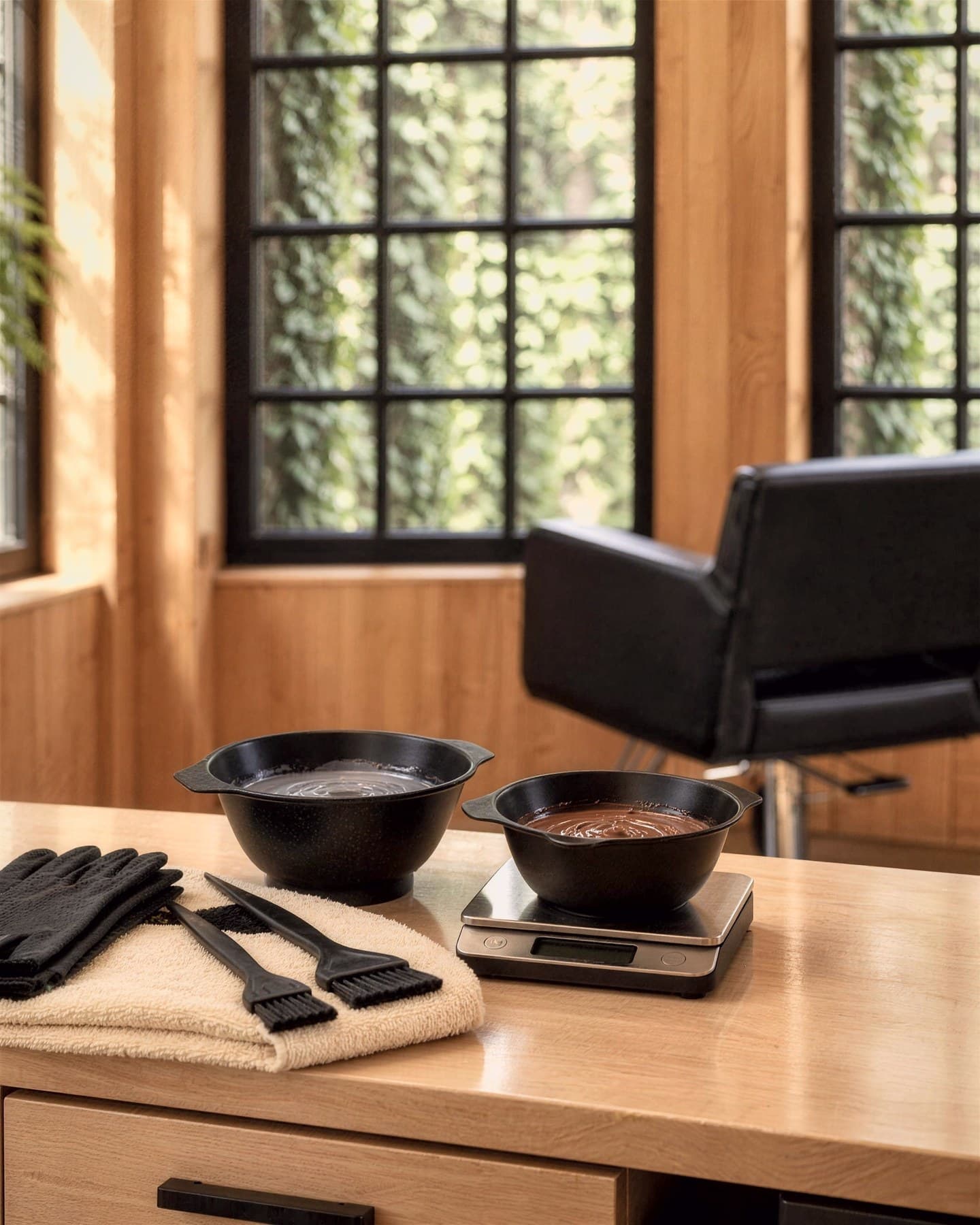
What it is
Single-process color covers gray with one shade from root to end. It works, and it also leaves a hard line every few weeks. Dimensional coverage places more than one tone, so gray blends rather than disappears. The result reads as your own hair, only better kept.
Gray blending sits at the softer end of the same idea. Lighter and darker tones are placed through the hair so the gray reads as brightness, and the line where it grows back is much softer. Full coverage sits at the other end, for anyone who wants the gray gone. Your plan may land somewhere between the two, and that is what the consultation is for.
Who it suits
Anyone tired of the regrowth line, anyone easing toward their natural gray, and anyone who wants coverage that looks less like coverage.
It tends to suit gray that is spread through the hair rather than gathered in one place. If you would rather see no gray at all, full coverage with color only may suit you better, and we will say so at the consultation.
How the appointment goes
- A conversation first: your history, how much gray you want softened, how often you want to come in.
- Color placed by hand where light falls.
- A finish and style, with advice for the weeks between visits.
How many visits it takes
Plans vary, and yours is set at the consultation. Some clients reach the look they want in one appointment. Others, especially anyone moving away from years of single-process color, get there over a few visits, with each one softening the line a little more.
We tell you up front how many visits we expect and what each one costs, so there are no surprises along the way.
Between visits
Between color appointments, a gloss or toning appointment can refresh the tone of your color without a full service. Whether one fits your plan depends on your hair and how often you want to come in, so ask about it at your consultation or your next visit.
If your regrowth starts to bother you before your next appointment, call or text (912) 236‑7577 and we will look at whether to move it up.
Prices as listed on GlossGenius, October 2026.
Questions clients ask
Is gray blending the same as highlights?
No. Highlights lighten strands for brightness. Gray blending places lighter and darker tones so the gray reads as part of your color. A blend can use highlights as one of its tools, and you can read more on our balayage and highlights page.
Will it cover all of my gray?
Dimensional coverage softens gray rather than hiding every strand. If you want every gray covered, full coverage does that. We talk through which suits you at the consultation.
How often will I need to come in?
It depends on how fast your hair grows, how much gray you have, and whether you choose blending or full coverage. Blending grows out more softly, so visits can often be further apart. Your schedule is set at the consultation.
Can I go fully gray later?
Yes. Blending is a common first step, because the gray is already part of the look. How long the change takes depends on your hair and your color history, and we plan it with you.
What happens at the free consultation?
It takes about 10 min. We look at your hair, ask about your color history and how much gray you want softened, and agree on a plan and a price before anything is mixed.
How much does it cost?
Dimensional gray coverage is priced at your consultation, because the price depends on how much gray you have, your hair's length and density, and your color history. For reference, color only starts at $80 on the menu.